
Che Cu Nha Village: The Heart of Mu Cang Chai's rice terraces
Forget flat, gentle rice paddies. Che Cu Nha village is where Mu Cang Chai's landscape becomes pure drama. This National Heritage site is a world of near-vertical terraces, offering a raw, unfiltered look at Vietnam's highland frontier. This guide is your key to exploring its challenging trails and rich H'mong culture.

Some things you must know about Che Cu Nha Village
Che Cu Nha is a highland commune, 7km from Mu Cang Chai town, and one of three core communes recognized as a Special National Heritage site since 2007. Its population is almost entirely H'mong, the creators of these terrace masterpieces. Accessing the best viewpoints is challenging, requiring a trek or a local motorbike taxi (xe om) due to steep, narrow dirt roads.

What's So Special About Che Cu Nha?
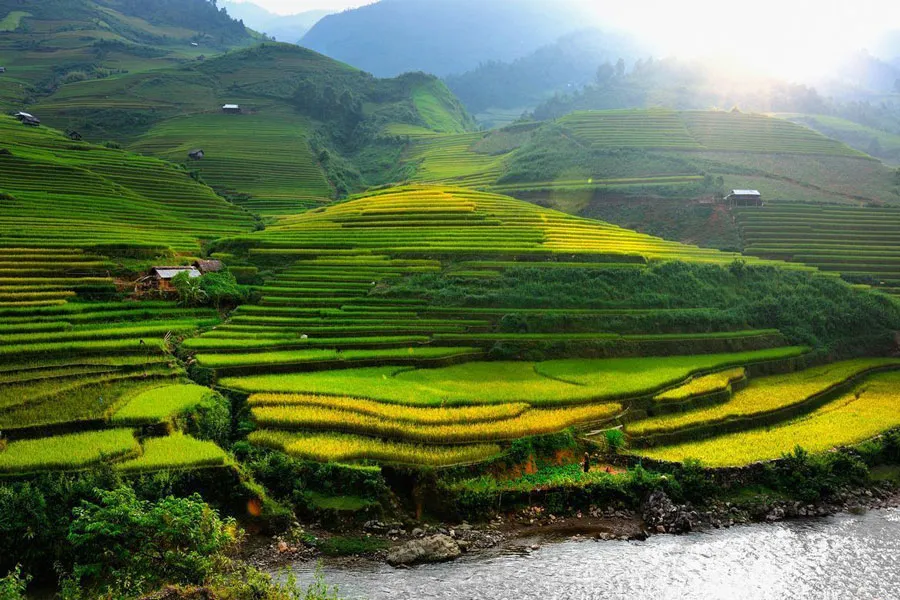
Che Cu Nha's unique appeal isn't a single viewpoint but its overwhelming, raw intensity. This is where the terraces are at their steepest and most dramatic, cascading down near-vertical slopes in a "waterfall" of sculpted earth. It feels less like a park and more like a rugged, working agricultural masterpiece, offering a truly authentic immersion where daily life unfolds on the very trails you hike.
What to Do When Visiting Che Cu Nha?
Trekking: This is a land built for trekking. The only way to truly see Che Cu Nha is by foot, following the narrow trails that locals have used for generations. A popular full-day trek to the neighboring La Pan Tan commune is an unforgettable journey, taking you deep into the heritage site for breathtaking, up-close views of the terraces and authentic glimpses of local life.

Photography: For photographers, Che Cu Nha offers compositions you simply can't find elsewhere. The focus here is on the dense, overlapping patterns and dramatic "horseshoe" curves. The "golden hour" during the harvest season (Sept/Oct) is magical, as the low sun casts shadows that sculpt and define each terrace, creating a breathtaking tapestry of light and texture.

Cultural Immersion: For deep cultural immersion, an overnight homestay with a H'mong family is unparalleled. It offers a chance to share meals, learn traditions, and wake up to misty valley views while respectfully observing daily life.

Key Viewpoints and Experiences While the commune is best appreciated as a whole, key experiences include:
The "Horseshoe Curve" Viewpoint: A famous spot where the terraces create a sharp, horseshoe-like bend, offering a classic photographic composition.

The Che Cu Nha - La Pan Tan Trek: This trail is a destination in itself, taking you through the heart of the most dramatic fields.

The "Waterfall" Terraces: Ask your guide to take you to a vantage point where you can see the terraces cascading down the steepest slopes, which is the defining feature of the village.

Travel tips for first-time travellers
Guides and Transport Hiring a local guide is highly recommended for safety on unmarked trails and for cultural translation. Avoid self-driving motorbikes on the steep dirt roads unless you are an expert; the safest option is hiring a local motorbike taxi (xe om) with an experienced driver.
Etiquette and Preparation Practice responsible tourism: respect H'mong culture by asking permission for photos and never walk on the crops. Below is a list of essential items to bring for your visit. Check out the list below to make sure you prepare all the stuffs you need.
Item | Reason | Check |
Sturdy Hiking Boots | Good grip is non-negotiable for the steep, narrow, and often muddy trails. | |
Ample Cash (VND) | Cards are not accepted in the village. Needed for guides, xe om, food, and homestays. | |
Sun Protection | Includes sunscreen, a hat, and sunglasses. The sun is strong at high altitudes. | |
Insect Repellent | Recommended, especially if trekking during the watering or green seasons. |
In conclusion, Che Cu Nha village is not for the casual tourist; it's an adventure for the traveler. It offers one of Vietnam's most powerful and authentic rice terrace experiences, deeply intertwining the raw landscape with the resilient H'mong culture. Let us make your visit here a true immersion into a living heritage site, leaving you with a profound sense of awe with our tailored trips that best fit your needs.


Comments